In the ever-evolving field of spinal therapy, physiotherapists and chiropractors are constantly seeking innovative approaches that deliver not just immediate pain relief, but also sustainable, long-term functional recovery for their patients. For years, standard spinal decompression has been a trusted method for addressing disc-related pathologies. However, a more comprehensive approach, known as Spinal Mobilisation and Rotational Therapy (SMART) Disc Decompression, is gaining prominence for its ability to facilitate a more holistic recovery. This article provides a comparative analysis of their biomechanical goals to help clinicians globally to make an informed decision when evaluating new equipment for their practice.
The Biomechanical Goal of Standard Decompression: A Focus on Disc Volume
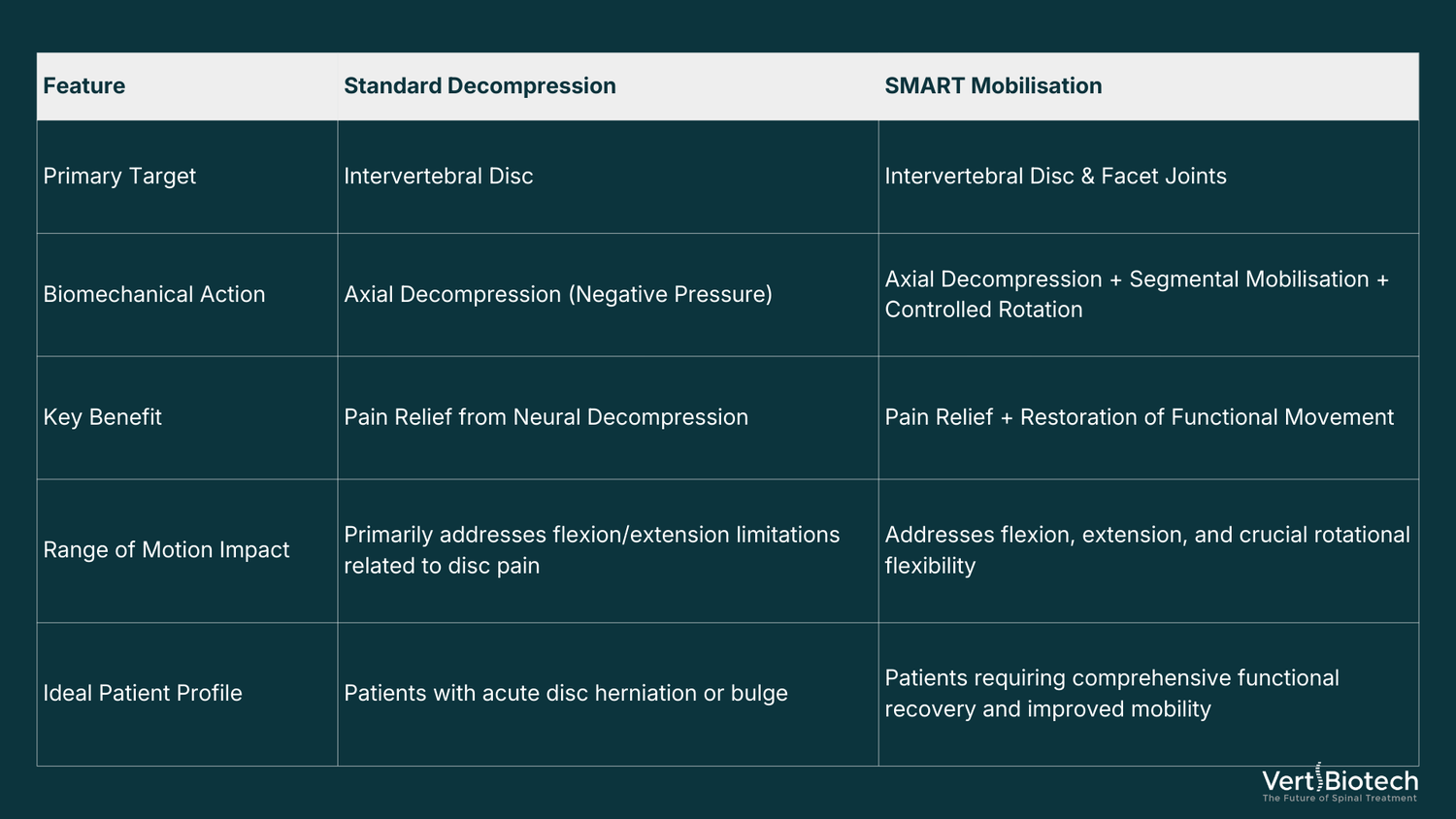
Standard non-surgical spinal decompression therapy has a clear and focused biomechanical objective: to alleviate pressure on the spinal discs and nerves. The therapy works by gently stretching the spine in an axial direction, which creates a state of negative pressure within the intervertebral discs [1]. This vacuum effect can help to retract bulging or herniated disc material, taking pressure off impinged nerve roots. The primary goal is to increase the volume of the disc space, thereby reducing pain and providing an optimal healing environment for disc injuries such as sciatica and degenerative disc disease.
While effective for acute pain relief stemming from direct neural compression, the limitation of standard decompression lies in its singular focus. It primarily addresses the vertical, axial plane of the spine and concentrates on the disc itself, often overlooking the crucial role of the surrounding articular structures.
Introducing SMART Disc Decompression: A Multi-Faceted Approach to Spinal Health
Spinal Mobilisation and Rotational Therapy (SMART) with AI Assisted Disc Decompression represents a significant evolution in decompression technology. Developed by a team of neurosurgeons, orthopaedic surgeons and chiropractors, the SMART-DD systems approach expands upon the foundational principles of standard decompression by incorporating two additional, critical biomechanical goals: restoring facet joint mobility and improving rotational flexibility.
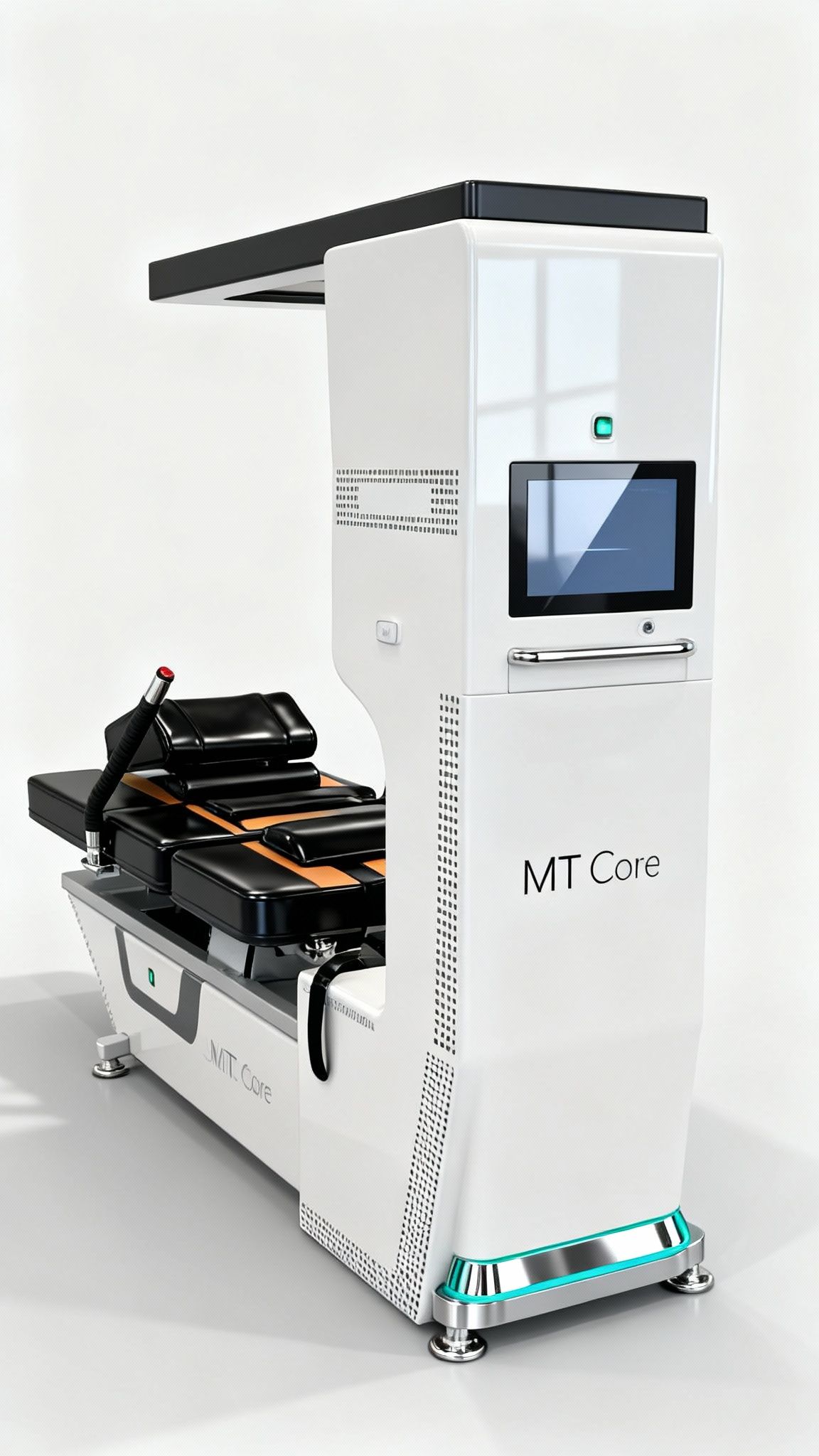
SMART-DD technology acknowledges that spinal dysfunction is rarely limited to the intervertebral disc alone. Facet joint restrictions and a lack of rotational capacity are significant contributors to chronic pain and limited range of motion [2]. By integrating gentle & controlled three-dimensional movement during the before, during and after the decompression process, SMART therapy addresses the spine as a complete functional unit.
Comparative Analysis: Standard Decompression vs. SMART Mobilisation
To better understand the clinical implications of these two methodologies, a direct comparison of their biomechanical objectives is essential.
Why 3D Movement with Disc Decompression is the Key to Long-Term Success
The most significant differentiator of the SMART-DD systems is its emphasis on rotational flexibility. Everyday functional movements, from turning to look over your shoulder while driving to swinging a golf club, rely on the spine’s ability to rotate safely and effectively. Standard decompression, with its purely axial pull, does not address restrictions in this critical plane of movement.
By actively mobilising the facet joints and introducing gentle rotation, SMART-DD systems help to break down adhesions, improve synovial fluid exchange, and retrain neuromuscular pathways. This focus on multi-planar movement is what transitions a patient from a state of simple pain relief to one of genuine, functional recovery, significantly reducing the likelihood of re-injury.
The Vert Biotech Advantage: A Conclusion for the Modern Clinician
While standard decompression certainly has its place in managing acute discogenic pain, its scope is inherently limited. For the discerning physiotherapist or chiropractor aiming to provide a truly holistic treatment, the choice is clear. The future of spinal therapy lies in a comprehensive approach that addresses the intricate relationship between the discs, facet joints, and the spine's full range of motion.
Vert Biotech's SMART-DD Systems provide clinicians with the tools to move beyond temporary solutions. By targeting not only disc volume but also facet joint mobility and rotational flexibility, it empowers practitioners to guide their patients towards a more complete and lasting functional recovery. For practices looking to invest in technology that delivers superior, long-term outcomes, the SMART choice is the intelligent one.
References
[1] Cleveland Clinic. (2023). Spinal Decompression Therapy: Lower Back Pain & Back Pain Relief.
[2] Physiopedia. (n.d.). Facet Joint Syndrome.