The Practitioner's Dilemma
As a dedicated clinic owner or practitioner, your commitment to delivering exceptional patient outcomes is unwavering. However, the physical demands of manual therapy, particularly when managing complex spinal conditions, can take a significant toll. After years of bending, twisting, and adjusting, many seasoned professionals find themselves battling the same chronic pain as their patients. This reality presents a critical challenge: how do you scale your practice and treat complex cases effectively without sacrificing your own physical wellbeing and career longevity?
The answer lies not in working harder, but in working smarter. Advanced technology now offers a way to enhance clinical precision, improve patient outcomes, and protect your most valuable asset, you. This comprehensive guide provides a practical, actionable framework for integrating SMART (Spinal Mobilisation and Rotational Therapy) Disc Decompression, specifically through the Spine Series of devices, into your existing clinical pathways. It is designed to help you seamlessly adopt this technology, customise advanced treatment protocols, and ultimately, reclaim your time and energy whilst elevating your standard of care.
Why SMART Disc Decompression? The Triple-Win for Your Practice
Integrating automated, multi-planar spinal mobilisation and decompression is more than just adding a new piece of equipment; it represents a fundamental shift in how you approach treatment. This technology delivers a powerful trifecta of benefits for the practitioner, the patient, and the practice itself.
1. For the Practitioner: Preserve Your Body, Extend Your Career
The physical strain of manual therapy is a leading cause of burnout and injury among chiropractors, physiotherapists, and osteopaths [1]. Repetitive, forceful movements contribute to cumulative stress on joints and soft tissues, leading to chronic pain and fatigue. The Spine Series automates the most physically demanding aspects of decompression and mobilisation, allowing you to deliver precise, powerful treatments without the personal cost. By offloading this strain, you can reduce the risk of work-related injury, minimise daily fatigue, and ensure you can continue practising for many years to come.
This is particularly important for practitioners who have already invested decades in their careers. Rather than facing the prospect of early retirement due to physical limitations, SMART mobilisation allows you to transition into a more sustainable practice model. You can focus on complex assessments, patient education, and treatment planning, the aspects of your work that drew you to the profession in the first place, whilst the technology handles the repetitive, physically demanding components.

2. For the Patient: Precision, Education, and Measurable Results
Manual therapy, for all its benefits, has inherent limitations in consistency and precision. SMART mobilisation systems deliver treatment with millimetre accuracy, ensuring every session provides the exact force, angle, and rotation required. The multi-planar capabilities of the Spine Series allow for highly targeted interventions that are difficult, if not impossible, to replicate manually.
Furthermore, features like real-time biofeedback and on-screen educational presentations empower patients by helping them understand their treatment, which improves compliance and builds trust. Progress tracking, including VAS (Visual Analogue Scale) pain scores, provides clear, measurable evidence of improvement, reinforcing the value of your care. When patients can see tangible progress documented across sessions, they are more likely to complete their treatment course and refer others to your clinic.
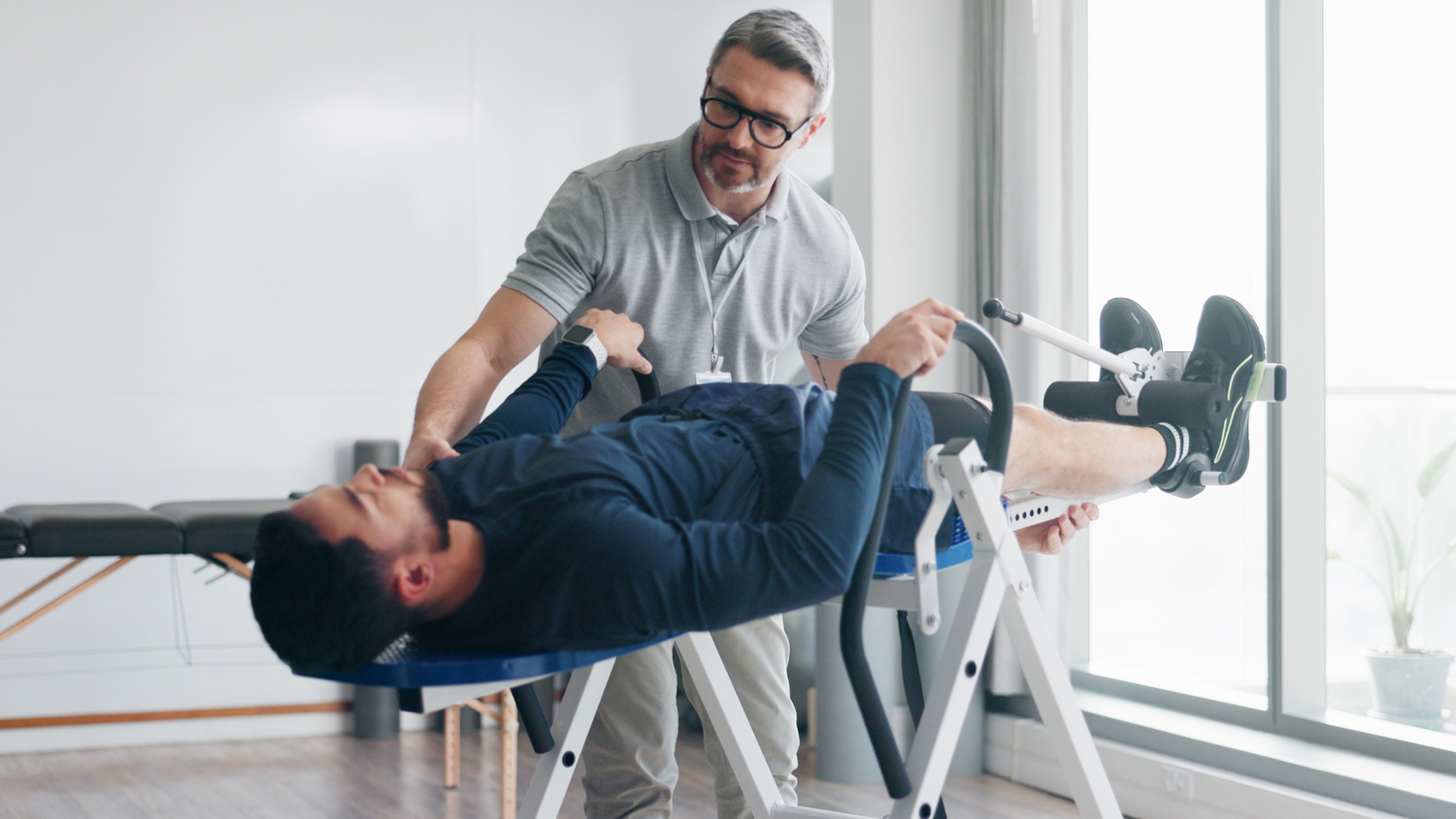
3. For the Clinic: Scalability and Market Differentiation
Automated therapy introduces unparalleled efficiency into your workflow. A SMART mobilisation device can run a complete, monitored treatment session autonomously, freeing you to attend to other patients or manage your practice. This allows you to increase your clinic's capacity and revenue without needing to hire additional staff. One device can deliver multiple high-quality treatments per day, each with consistent outcomes and comprehensive documentation.
In a competitive market, offering cutting-edge, evidence-based technology also sets your clinic apart. It becomes a powerful marketing tool that attracts patients seeking the most advanced non-surgical spinal care available. Patients increasingly expect clinics to utilise the latest technology, and offering SMART mobilisation, positions your practice as a leader in innovation and clinical excellence.

Understanding the Spine Series: A Tool for Every Clinic
The Spine Series offers a range of devices tailored to different clinical needs and budgets. Whilst all models are built on the same core principles of multi-rotational 3D decompression, they offer distinct feature sets designed to meet clinics at different stages of growth and specialisation.
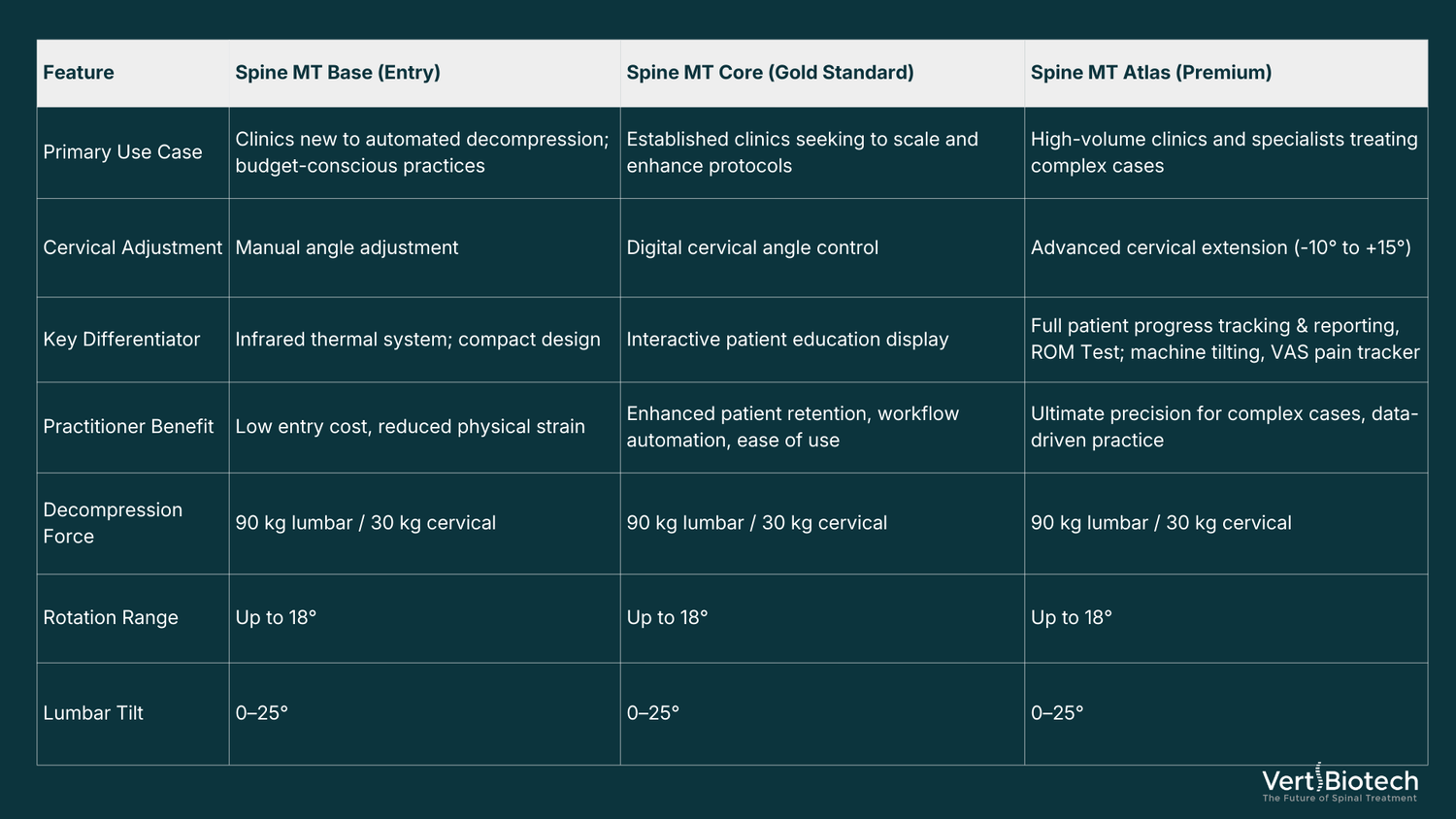
Shared Features Across All Models
Regardless of which Spine Series device you choose, all models include five automated mobilisation modes that form the foundation of your treatment protocols. These modes are: Mob 1 (twisting motion for joint activation), Mob 2 (lateral movement with twisting for multi-plane engagement), Rot (Decompression + Decompression whilst in rotated position), De-Rot (decompression whilst in a rotated position for deeper disc release), and Mob-Rot (combined mobilisation and rotation+ Decompression rotation). Additionally, all models feature lateral flexion control, temperature-controlled bedding, real-time safety monitoring, AI assisted biofeedback, and pre-programmed treatment protocols that can be customised to individual patient needs.
A Step-by-Step Guide to Implementation: Your 4-Week Rollout Plan
Successfully integrating a new modality requires a structured approach. This timeline provides a generic framework that can be adapted to your clinic's specific needs, patient population, and existing workflow.
Week 1: Foundational Training and Patient Assessment
The first week is dedicated to building confidence and competence. Your team should focus on mastering the device's functions and identifying ideal first candidates for treatment.
Complete Initial Training: Ensure all practitioners are proficient in the device's operation, safety features, and pre-programmed protocols. This training should cover emergency procedures, patient positioning, and basic troubleshooting. Most providers offer comprehensive onboarding, and it is worth investing time to ensure your entire team is confident.
Identify Suitable Patients: Review existing patient files to identify individuals with chronic, stable conditions like lumbar spondylosis or degenerative disc disease who would be suitable for introductory protocols. Ideal first candidates are those with well-documented conditions, realistic expectations, and good compliance history. Avoid acute cases or patients with complex medical histories during this initial phase.
Establish Assessment Protocols: Before the first session, perform a built-in patient mobilisation test to establish a safe baseline range of motion and tolerance. This test is integral to the device's safety system and provides valuable information about the patient's current functional status. Document this baseline carefully, as it will serve as your comparison point for measuring progress.
Week 2: Integrating Core Protocols for Common Conditions
Begin applying the technology to straightforward cases using the device's intelligent, pre-programmed protocols. This phase focuses on building clinical experience and observing patient responses in a controlled manner.
Apply Pre-Set Programs: Start treating your selected patients using the pre-set programs for conditions like lumbar disc herniation or facet syndrome. These protocols have been developed based on clinical evidence and represent a safe, effective starting point. Do not feel pressured to customise immediately; allow yourself and your patients to become comfortable with the technology first.
Monitor Patient Comfort: Focus on monitoring patient comfort and feedback throughout the session. Use the real-time decompression graph to ensure treatment parameters remain stable and that the patient is responding appropriately. Pay attention to verbal and non-verbal cues, and be prepared to adjust settings if the patient reports discomfort.
Document Outcomes: Document initial outcomes, comparing pre-treatment and post-treatment VAS scores and functional improvements. This data is invaluable for demonstrating the effectiveness of your new modality to other patients and for building confidence in your own clinical decision-making.
Week 3: Advanced Customisation for Complex Cases
With a solid foundation, you can now begin leveraging the full versatility of the device's multi-planar settings to create customised protocols for more challenging conditions.
Modify Protocols Based on Patient Needs: Begin modifying protocols based on patient-specific needs. For example, introduce lateral flexion for unilateral symptoms or use the De-Rot mode for deeper disc release in rotated positions. This is where the true power of the technology becomes apparent, the ability to tailor treatment precisely to each patient's anatomy and pathology.
Apply to Complex Conditions: Apply these customised protocols to conditions like post-fusion adjacent segment issues, using gentle mobilisation to offload the affected levels. The key is to start conservatively and progress gradually, monitoring the patient's response at each stage.
Document Parameters: Document the parameters used for each custom protocol and track the patient's response closely. Over time, you will develop a library of successful protocols that can be applied to similar cases, further streamlining your workflow.
Week 4: Full Integration, Patient Education, and Outcome Tracking
By the final week, SMART mobilisation should be a fully integrated part of your clinical workflow. The focus now shifts to optimising patient education and leveraging outcome data.
Utilise Educational Features: Utilise the interactive LED display (on Core and Atlas models) to educate patients during treatment, improving their understanding and compliance. Patients who understand their treatment are more engaged and more likely to complete their course of care. The on-screen presentations also provide a professional, modern touch that enhances your clinic's image.
Generate Progress Reports: Regularly use the patient progress tracking features to generate reports that visually demonstrate improvement over time. These reports are powerful tools for patient motivation and can be shared with referring practitioners to build your professional reputation.
Develop Combined Therapy Pathways: Develop combined therapy pathways, where a session on the Spine MT is followed by targeted manual therapy or rehabilitative exercises. This integrated approach often yields superior outcomes compared to either modality alone, as the mobilisation prepares the tissues and nervous system for more effective manual intervention.
Protocol Customisation: A Deeper Dive into Specific Conditions
The true power of the Spine Series lies in its customisability. The five automated mobilisation modes allow you to design highly specific and effective treatments tailored to each patient's unique presentation.
Cervical and Lumbar Spondylosis with Spinal Stenosis
Spondylosis refers to degenerative changes of the spine, often accompanied by bone spur formation and disc degeneration. When these changes result in narrowing of the spinal canal (stenosis), nerve compression and radiculopathy can occur. For these compressive conditions, the goal is to create space and improve mobility.
A combination of De-Rot (decompression in rotation) and gentle Mob 1 (twisting motion) can help decompress the foramina and facet joints, alleviating nerve pressure. The lumbar tilt function (0–25°) is crucial for targeting specific segments. Start with conservative settings and progress gradually, monitoring the patient's neurological symptoms closely. Many patients with stenosis experience significant relief within 4–6 weeks of consistent treatment, particularly when combined with appropriate exercise and activity modification.
Post-Fusion Adjacent Segment Disease (ASD)
Adjacent segment disease occurs when the segments above or below a spinal fusion are subjected to increased stress [2]. This is a common long-term complication of spinal fusion surgery, affecting up to 30% of patients within 10 years of surgery. The key to managing ASD is gentle, controlled mobilisation that restores normal movement patterns without compromising the integrity of the fusion.
Use the Rot mode with low rotational angle (e.g., 5–10°) and slow speed to mobilise and decompress the adjacent segments without compromising the fusion site. This helps distribute mechanical loads more evenly and can prevent further degeneration. It is essential to obtain clearance from the patient's surgeon before commencing treatment, and to avoid aggressive mobilisation or decompression at the fusion level itself. The goal is to restore mobility and function to the segments adjacent to the fusion, thereby reducing compensatory stress.
Disc Herniation: Directional Preference Approach
The protocol for disc herniation depends on the type and direction of the herniation. Utilise the concept of directional preference, which suggests that certain movements may centralise symptoms (move them from the limb toward the spine), whilst others peripheralise them. For a posterior-lateral herniation, using lateral flexion away from the affected side combined with rotational decompression can help centralise the nucleus pulposus. The Mob-Rot mode, which combines decompression with decompression while in a rotated position, is excellent for restoring full spinal mobility once the acute phase has passed.
Early in the course of treatment, focus on gentle decompression and mobilisation to reduce inflammation and nerve irritation. As the patient improves, gradually increase the intensity and complexity of the mobilisation. Many patients with acute disc herniation experience significant improvement within 2–3 weeks of consistent treatment, particularly when combined with appropriate activity modification and core stabilisation exercises.
Facet Joint Dysfunction and Unilateral Symptoms
Unilateral facet joint restrictions respond exceptionally well to targeted lateral flexion. This movement opens the affected joint space, relieving pain and restoring symmetry. Combine this with the Mob 2 mode (lateral movement with twisting) to engage the surrounding soft tissues. Facet joint dysfunction often presents with unilateral pain that worsens with extension and rotation toward the affected side. By using lateral flexion away from the affected side, you can decompress the joint and provide immediate symptom relief.
For patients with chronic facet joint dysfunction, a series of 6–8 treatments often results in significant functional improvement. The key is consistency and gradual progression, allowing the tissues to adapt and remodel over time.
Practitioner Ergonomics: Protecting Your Most Valuable Asset
One of the most compelling reasons to integrate SMART Disc Decompression Systems is the profound impact on practitioner health and longevity. Manual therapy places enormous demands on the practitioner's body, particularly the lower back, shoulders, and wrists. Over a career spanning 20–30 years, these cumulative stresses can result in chronic pain, disability, and early retirement.
By automating the most physically demanding aspects of treatment, you can significantly reduce your risk of occupational injury. The Spine Series handles the repetitive, forceful movements that cause the most damage, whilst you focus on assessment, patient education, and treatment planning. This shift not only protects your physical health but also allows you to practise at a higher level, focusing on the aspects of your work that require your expertise and judgment.
Research consistently demonstrates that healthcare professionals who utilise automation and assistive technology experience lower rates of burnout, musculoskeletal injury, and job dissatisfaction [1]. By investing in SMART Disc Decompression, you are investing in your own long-term health and career satisfaction.
An Ecosystem of Support: You're Not Alone
Adopting new technology can feel like a significant leap, but you are not expected to make it alone. A robust ecosystem of support is vital for ensuring your long-term success and confidence.
Continuous After-Sales Service and Training
Your relationship with the provider does not end upon delivery. Ongoing training and technical support ensure you can confidently and safely maximise the device's capabilities as your skills and clinical needs evolve. Most providers offer regular webinars, case consultations, and technical support to help you get the most out of your investment. Do not hesitate to reach out with questions or to discuss challenging cases.
The Decompression Doctors Network
This exclusive global network connects you with like-minded professionals who are also leveraging this technology. It is an invaluable forum for sharing clinical results, discussing challenging cases, and learning innovative strategies that are helping practitioners achieve better patient outcomes, scale their businesses, and reclaim their time. Members of the network regularly share successful protocols, patient case studies, and business insights that can accelerate your learning curve and help you avoid common pitfalls.
By connecting with other practitioners who have successfully integrated SMART Disc Decompression, you gain access to a wealth of practical knowledge and experience. This community support is often as valuable as the technology itself, particularly during the early stages of implementation.
Investing in Your Future
By integrating SMART Disc Decompression into your practice, you are not just investing in a machine; you are investing in a more sustainable, profitable, and impactful future for your clinic, your patients, and yourself. The Spine Series represents the convergence of clinical evidence, technological innovation, and practical wisdom, a tool that allows you to deliver world-class care whilst protecting your own health and wellbeing.
The journey from manual therapy to technology-enhanced care is not a replacement of your skills; it is an amplification of them. Your clinical expertise, judgment, and compassion remain central to your practice. The technology simply allows you to express these qualities more effectively, consistently, and sustainably.
Whether you choose the Spine MT Base to enter the world of automated decompression, the Spine MT Core to scale your existing practice, or the Spine MT Atlas to achieve the ultimate in precision and data-driven care, you are making a commitment to excellence. Combined with the ongoing support of your provider and the collective wisdom of the Decompression Doctors Network, you have everything you need to succeed.
The time to act is now. Your future patients, and your future self, will thank you for taking this step.